Curtain Call for a New America: How Spanish-Language Theater Is Stealing the Spotlight in US Performing Arts
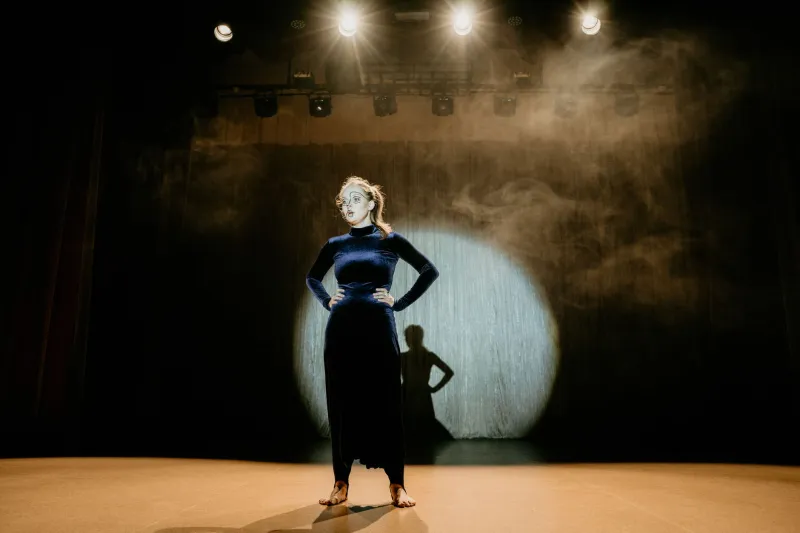
There's a moment that happens in a good theater production — that electric second when the lights drop, the audience goes quiet, and something true is about to be said out loud. For a growing number of US theatergoers, that moment is now happening in Spanish. Or in Spanglish. Or in a bilingual blur that feels less like a language barrier and more like a door swinging wide open.
Spanish-language and bilingual theater has been quietly building momentum across American cities for years. But lately, "quietly" doesn't quite cut it anymore. Productions are selling out. Companies are expanding. Playwrights who once struggled to get readings are now fielding commissions from major institutions. And audiences — both Latino and non-Latino — are showing up hungry for stories that mainstream Broadway has historically left on the cutting room floor.
A Scene That's Been Here All Along
Let's be clear about one thing: this isn't new. Latin theater in the US has deep, tangled roots. In the Southwest, Spanish-language performance traditions predate English-language ones by centuries. In New York, Puerto Rican and Cuban theater communities were carving out space as far back as the early 20th century. What's changed is the infrastructure around it — and the mainstream attention finally catching up.
Companies like GALA Hispanic Theatre in Washington, D.C. have been doing this work for decades, presenting productions in Spanish with English supertitles and building genuinely bilingual audiences in the process. Teatro Vista in Chicago has spent over 30 years developing Latinx voices for the American stage. And on the West Coast, groups like Casa 0101 Theater in Boyle Heights, Los Angeles, have made community-rooted storytelling their entire identity — not as a side project, but as the main event.
What these organizations share is a stubborn insistence that Latin American dramatic tradition — with its emotional intensity, its magical realism, its unshakeable connection to family and land and memory — belongs at the center of American cultural life. Not as a curiosity. Not as a diversity checkbox. As the main act.
The Playwrights Changing Everything
Ask anyone working in this space who's driving the energy right now, and names start coming fast. Playwright Tanya Saracho, who built a massive television following with the show Vida, spent years writing for Chicago's Latino theater scene before Hollywood came knocking. Her work — raw, funny, deeply Chicana — helped prove that these stories had commercial and artistic legs.
More recently, writers like Camilo Alarcón and Erlina Ortiz have been developing work that pulls directly from Latin American theatrical traditions — think the heightened drama of telenovela storytelling fused with the experimental stagecraft of contemporary American theater. The result is something that doesn't look quite like anything else on a US stage right now. It's louder. More physical. More willing to be unabashedly melodramatic in ways that feel like a feature, not a bug.
"There's a theatricality in how Latin American families communicate that mainstream American drama has always underplayed," one director working in this space put it recently. "We cry at funerals and we cry at weddings and we cry when the food is really good. That's not excess — that's just honest."
The Bilingual Question
One of the most interesting creative tensions in this movement is the question of language itself. Some companies present work entirely in Spanish, relying on supertitles to bring in English-dominant audiences. Others write deliberately bilingual scripts where code-switching isn't a stylistic choice — it's the whole point.
That second approach has produced some of the most talked-about productions in recent years. When a character slips between English and Spanish mid-sentence, something real happens in the room. Bilingual audience members recognize themselves. English-dominant viewers get a tiny, productive taste of what it feels like to follow a conversation in a language that isn't fully yours. The power dynamic in the theater shifts, even briefly, and that shift carries meaning.
Directors working in this mode talk about it as a form of radical hospitality — welcoming everyone into the room while refusing to flatten the cultural specificity that makes the work matter. It's a tricky balance, and not everyone pulls it off. But when it works, it works in a way that monolingual theater simply can't replicate.
From Community Stages to Major Institutions
The institutional landscape is shifting too. Regional theaters and major performing arts centers that once treated Latin work as an occasional programming add-on are now actively commissioning it, building relationships with Latin theater companies, and in some cases restructuring their entire programming approach.
The Repertorio Español in New York — one of the longest-running Spanish-language theaters in the country — has seen renewed interest from younger audiences who grew up consuming Latin American telenovelas and streaming series and are now curious about live performance rooted in the same cultural soil. That pipeline from screen to stage is real, and smart theater programmers are paying attention to it.
Meanwhile, university theater programs are starting to incorporate Latin American dramatic literature and performance traditions into their curricula in more serious ways. Students who once had to seek out this work on their own are now finding it in syllabi alongside Chekhov and Ibsen — which means the next generation of American theater-makers is growing up with a much broader sense of what the form can do.
What Performers Say About This Moment
For the actors and directors actually doing this work, the current moment feels less like a trend and more like a long-overdue correction.
"I spent years auditioning for roles that were written as afterthoughts," one performer based in Los Angeles shared. "The Latin character who shows up in scene three to provide color and then disappears. Now I'm doing work where the entire world of the play comes from my culture, my family's history, my grandmother's way of speaking. That's a completely different experience of being an artist."
There's also something meaningful happening for audience members who may have never seen their own lives reflected on a stage before. Theater has always had this particular power — the live human body in a shared space, telling a story in real time — that no screen can fully replicate. When that story is yours, the effect is amplified in ways that are hard to describe and impossible to forget.
Where It's All Headed
The trajectory here points upward, but not without friction. Funding for Latin theater companies remains inconsistent. Institutional support, while growing, still lags behind the actual cultural weight of the Latino population in the US. And there's always the risk that mainstream attention brings with it pressure to sand down the edges — to make the work more palatable, more universal, less specifically itself.
The companies and artists navigating this moment seem aware of that risk. The goal isn't to make Latin theater safe for American audiences. It's to expand what American audiences understand as theirs.
And if that happens one sold-out production at a time, in a converted warehouse in Houston or a landmark theater in Miami or a community playhouse in Denver — well, that's how cultural shifts actually happen. Not in grand announcements, but in rooms full of people watching something true get said out loud.
The curtain is rising. Make sure you've got a seat.