Accordion and Algorithm: Why Gen Z Can't Stop Streaming Regional Mexican Music
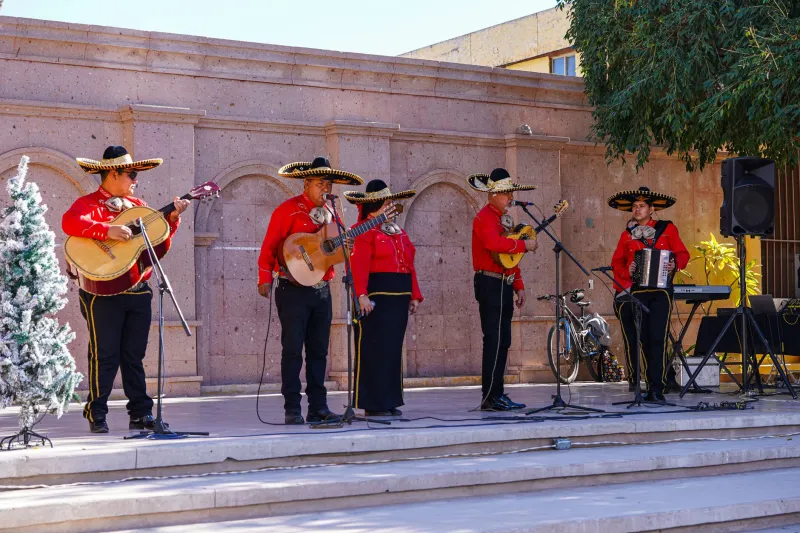
If you'd told a major label executive five years ago that one of the fastest-growing music categories on US streaming platforms would be norteño — a genre built around accordion, bajo sexto, and storytelling traditions stretching back over a century — they probably would have smiled politely and changed the subject. The conventional wisdom said regional Mexican music was a niche category, beloved within its community and largely invisible outside it.
The conventional wisdom was wrong. Spectacularly, measurably, undeniably wrong.
The Numbers That Changed the Conversation
Regional Mexican music — an umbrella that covers norteño, banda, corridos, sierreño, and the newer hybrid subgenres — has been quietly dominating Spotify and Apple Music charts in ways that have forced the industry to pay attention. Artists like Peso Pluma, Natanael Cano, and Eslabon Armado aren't just charting on Latin-specific charts. They're charting on the main boards, competing directly with pop and hip-hop heavyweights.
What's striking about the streaming data isn't just the volume — it's the geography and the demographics. Listeners in states with relatively small Latino populations are streaming this music at rates nobody predicted. And the age skew is younger than anyone expected, with Gen Z leading the charge in ways that suggest this isn't a nostalgia play. These aren't kids reconnecting with their grandparents' records. Many of them are hearing this music for the first time and choosing it.
So what's actually happening here?
The Corridos Tumbados Gateway
The clearest entry point for non-traditional listeners has been corridos tumbados — the fusion of traditional corrido storytelling with trap production aesthetics that artists like Natanael Cano pioneered in the late 2010s. The genius of corridos tumbados as a crossover vehicle is that it speaks two languages simultaneously: the melodic and narrative vocabulary of regional Mexican tradition, and the sonic vocabulary of contemporary American trap and hip-hop.
For a Gen Z listener who grew up on SoundCloud rap and knows trap production intimately, hearing an 808 bass under a bajo sexto isn't jarring — it's familiar and exciting at the same time. The trap elements provide the entry point; the regional Mexican elements provide the depth and distinction that keeps listeners coming back.
Natanael Cano described the approach in a Billboard interview as simply making music that felt true to where he came from while sounding like where he was. That balance — authentic roots, contemporary surface — is exactly the formula that has historically driven every major genre crossover in American music history, from jazz to rock to hip-hop.
TikTok as the Great Equalizer
Social media, and TikTok specifically, has done something for regional Mexican music that radio gatekeepers never would have. It put the music directly in front of people who had no prior context for it and let the songs make their own case.
The aesthetic of regional Mexican TikTok content — often featuring beautiful ranch landscapes, family gatherings, horses, and an unapologetic pride in Mexican rural culture — has proven surprisingly compelling to young Americans across ethnic backgrounds. There's an authenticity to it that stands out sharply against the highly produced, image-managed content that dominates mainstream pop music social media.
A teenager in rural Tennessee seeing a TikTok of a quinceañera in Jalisco set to a Peso Pluma song might not share any cultural context with that video, but they can recognize genuine celebration, genuine community, genuine emotion. That recognition travels across cultural lines in ways that manufactured cool simply doesn't.
The Storytelling That Hits Different
Beyond the sonic appeal, there's something happening at the lyrical level that deserves serious attention. Regional Mexican music, particularly in the corrido tradition, is fundamentally about storytelling. Detailed, specific, often morally complicated storytelling about real people, real places, and real circumstances.
In an era of pop music dominated by abstract emotional statements and deliberately vague lyrics designed to be relatable to the maximum number of people, the specificity of corrido storytelling is genuinely refreshing. Songs tell you exactly who did what, where, and what happened next. Characters have names. Places have geography. The narrative has stakes.
For listeners who've grown up consuming serialized television, true crime podcasts, and long-form narrative content, the storytelling density of corridos feels less like a foreign tradition and more like a familiar pleasure in an unexpected format.
"People want stories," said one Austin-based music journalist who has been covering the regional Mexican surge. "They want characters and consequences. Corridos give you that in three minutes. That's not a niche taste — that's a universal one."
What the Industry Is Still Getting Wrong
Despite the streaming numbers, the American music industry's relationship with regional Mexican music remains complicated and often condescending. The genre still gets siloed in Latin categories that don't reflect how broadly it's actually being consumed. Radio programmers, with some notable exceptions in markets with large Mexican-American populations, have been slow to respond to the data.
There's also a tendency to treat the corridos tumbados fusion as the only commercially viable form of regional Mexican music — ignoring the fact that traditional norteño and banda are also seeing streaming gains. The accordion-and-bajo-sexto sound of classic norteño, with no trap production in sight, is finding new listeners who are simply drawn to the musicianship and the emotional directness of the form.
Bands that have been touring the US for decades, playing for Mexican immigrant communities in agricultural towns and mid-sized cities, are suddenly finding that their audiences are expanding in unexpected directions. That's a story worth telling, even if it doesn't fit neatly into the crossover narrative the industry prefers.
The Roots Are the Point
Maybe the most important thing to understand about the regional Mexican surge is that its authenticity isn't incidental to its appeal — it's the entire point. This is music that has never tried to be anything other than what it is. It didn't soften its edges for American radio. It didn't replace the accordion with synthesizers to seem more modern. It kept the sombrero in the artwork and the border in the lyrics.
And a generation of American listeners, exhausted by music that seems engineered to offend no one and move everyone, found that honesty irresistible.
The accordion isn't going anywhere. The storytelling isn't getting simpler. The pride in regional Mexican identity isn't dimming. If anything, the audience is growing — and it's growing because the music refused to change for them. They changed for it instead.