Dembow Forever: How Reggaeton's Heartbeat Quietly Became the Pulse of American Pop
Something happened to American pop music around the mid-2010s and most people couldn't quite name it. Songs started feeling different — heavier in the low end, more syncopated, rhythmically hypnotic in a way that made your body respond before your brain caught up. Producers were calling it "the bounce." Journalists called it "influenced by Latin music." What it actually was, if you traced the DNA all the way back, was dembow — the foundational rhythm of reggaeton — doing what it's always done: taking over.
The story of how a genre born in the housing projects of San Juan and the urban neighborhoods of Santo Domingo became the invisible architecture of American mainstream music is one of the most underreported cultural shifts of the past decade. And it's a story that deserves a real telling.
The Beat That Started Everything
Dembow is, at its core, a rhythmic pattern — a syncopated kick and snare combination borrowed from Jamaican dancehall that Panamanian and Puerto Rican artists adapted in the late '80s and early '90s. By the time Daddy Yankee dropped "Gasolina" in 2004, the pattern had been refined into something almost irresistible. But even then, American radio treated reggaeton like a novelty — a seasonal guest, not a permanent resident.
What changed everything wasn't a single crossover hit. It was the producers.
Figures like Tainy, who started producing out of Puerto Rico in his teens, and Lex Nandez, along with the extended network of beatmakers orbiting the Bad Bunny universe, started getting calls from American labels. Not to make "Latin" music — to make hits. Full stop. And they brought their rhythmic toolkit with them.
"When you grow up making reggaeton, you think about rhythm differently," Tainy told an interviewer a few years back. "The space between beats matters as much as the beats themselves." That philosophy, translated into sessions with American artists, quietly infected the entire production ecosystem.
The Fingerprints Are Everywhere
Listen closely to mainstream American pop and R&B from 2016 onward and the reggaeton influence becomes almost comically obvious once you hear it. The syncopated hi-hat patterns. The way bass lines drop on unexpected beats. The call-and-response vocal layering. Even the melodic approach — that half-sung, half-spoken cadence that reggaeton artists perfected — shows up constantly in pop and hip-hop vocal performances now.
Justin Bieber's "Sorry," Drake's dancehall-adjacent catalog, the entire sonic palette of artists like J Balvin collaborating with Cardi B or Beyoncé — these aren't accidents. They're the result of Latin Caribbean producers sitting in the same rooms as American chart-toppers and speaking a rhythmic language that just... worked.
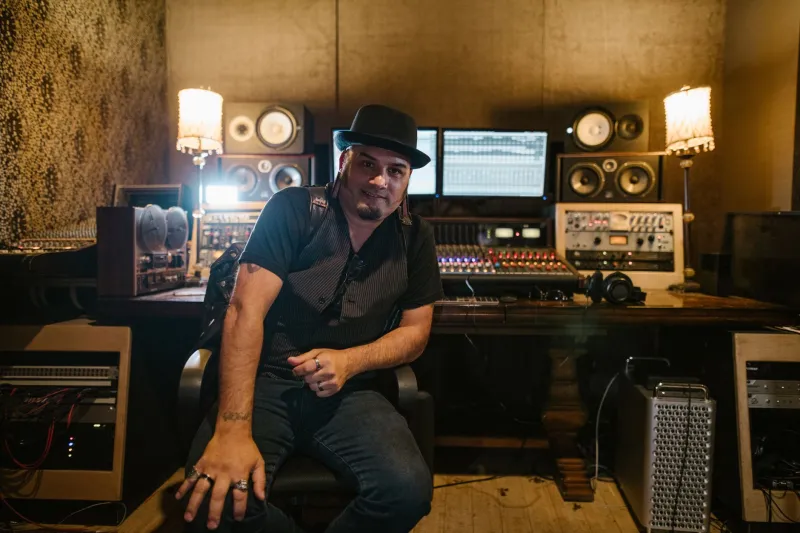
Hit songwriter and producer Keityn, who has credits on some of the biggest reggaeton crossover records of the past several years, described the process simply: "We don't think about genres in the studio. We think about what makes people move." That movement-first philosophy is fundamentally a reggaeton philosophy — a genre that has always prioritized the body over the brain.
The Engineers Nobody Talks About
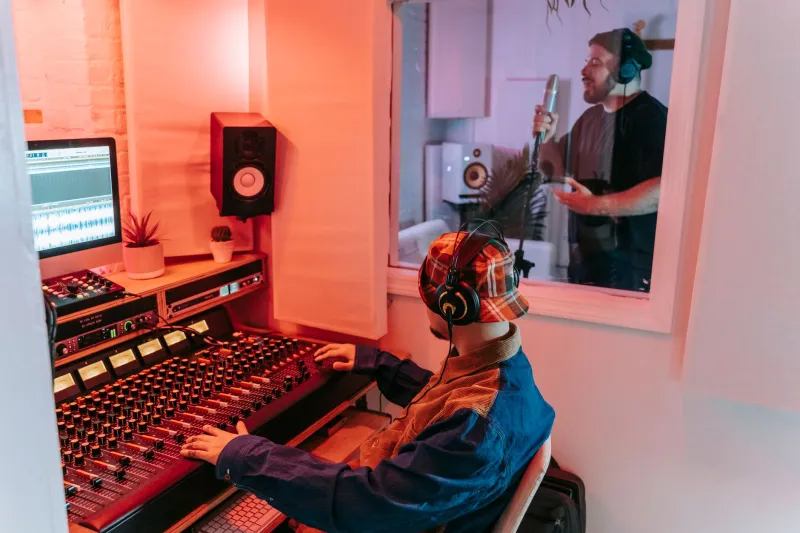
Beyond the producers, there's a layer of Latin engineers and mix engineers who've played a massive role in translating reggaeton's sonic qualities into American studio contexts. The way reggaeton is mixed — with a specific treatment of bass frequencies, vocal compression, and spatial effects — creates a density and immediacy that American engineers have been actively studying and borrowing.
Mixing engineers who cut their teeth on perreo tracks in Miami and Puerto Rico studios brought that aesthetic into sessions with American artists, and labels noticed that the results tested well. Radio programmers noticed that listeners responded. The feedback loop accelerated.
This is how cultural influence actually moves — not through grand announcements, but through technical knowledge passing between people in rooms, through engineers sharing techniques, through producers texting each other beats at 2 a.m.
Why Reggaeton Won the Blueprint War
Hip-hop has long been the dominant production language of American pop. So why did reggaeton's rhythmic innovations manage to penetrate and alter that language rather than simply getting absorbed and erased?
Part of the answer is streaming. When Spotify and Apple Music started surfacing Latin music to non-Latin listeners based on algorithmic recommendations, American audiences began encountering reggaeton not as a foreign genre but as just another playlist entry that hit hard. They didn't need to understand the cultural context — they just needed to feel the beat. And dembow, it turns out, is extraordinarily good at making people feel things.
The other part of the answer is Bad Bunny. His albums' success in the US general market — not just the Latin market — proved to American labels that there was no ceiling on how far this sound could travel. If a Spanish-language artist rapping and singing over pure reggaeton and Latin trap production could become one of the most-streamed artists on the planet, then the production style itself was clearly universal.
What It Means Going Forward
American pop music in 2024 sounds the way it does largely because a generation of Latin Caribbean producers refused to sand down their rhythmic edges when they entered mainstream rooms. They brought dembow with them, and they were right to.
The influence isn't going anywhere. If anything, it's deepening. Younger American producers — many of them not Latino at all — are now actively studying reggaeton production techniques the way previous generations studied Atlanta trap or New York boom-bap. It's become part of the standard toolkit.
For those of us who grew up hearing these rhythms at family cookouts, in cars with the windows down, at clubs where the floor didn't stop moving — there's something genuinely satisfying about watching the world catch up. The heartbeat of the Caribbean is now the heartbeat of American pop. It just took the industry a while to admit it.