Raised on Two Worlds: How US-Born Latinos Are Blowing Up the Rulebook on Latin Music
Growing up in a house where your abuela plays Los Bukis on Saturday mornings and your older brother blasts Kendrick Lamar on Saturday nights does something to a kid. It rewires the way you hear music. And for a growing wave of US-born Latino artists, that rewiring isn't a contradiction — it's the whole point.
They're calling it the remix generation, though most of them would roll their eyes at the label. These are second and third-generation Latino Americans who didn't choose between their heritage and their environment — they absorbed both, then hit record.
The Sound of Growing Up In Between
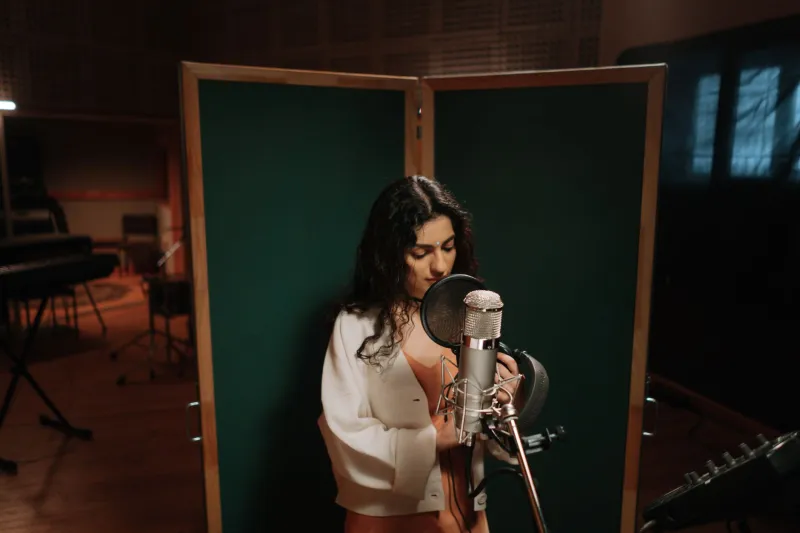
Take Marisol Reyes, a 26-year-old producer from East Los Angeles whose parents immigrated from Oaxaca. She makes music she describes as "cumbia with ADHD" — traditional rhythms layered over lo-fi drum machines, with lyrics that switch between Spanish and English mid-verse. Her SoundCloud page has 40,000 followers. Her mom thinks it sounds like a broken radio.
"She doesn't get it yet," Marisol says with a laugh. "But she'll be humming one of my beats while she cooks and not even realize it. That's the whole goal."
This creative friction — between honoring what came before and building something new — is the defining tension of this generation. And it's producing some of the most interesting music coming out of the US right now.
In Houston, a collective called Tejano Future is blending norteño accordion lines with ambient electronic textures. In Miami, artists are folding Haitian kompa rhythms into reggaeton production. In Chicago, a young MC named Dante Flores raps entirely in Spanglish over beats that sample old Mexican corridos, then distort them through a vocoder until they sound like something from another planet.
Who Gets to Hold the Microphone?
Not everyone is celebrating. Cultural critics and older listeners have raised real questions about what gets lost when traditional forms get remixed for a new audience.
Dr. Carmen Villanueva, a musicologist at the University of Texas at San Antonio, puts it plainly: "There's a difference between innovation and erasure. When you strip a genre down to just its most recognizable element and paste it onto a completely different musical structure, you have to ask — what are you actually preserving? And who is that for?"
It's a fair challenge. And the artists themselves don't dismiss it. Most of them grew up with grandparents who lived these musical traditions — who danced to this music at quinceañeras, who sang these songs at funerals, who built community around them. The weight of that isn't lost on them.
But producer and DJ Ernesto "Neto" Canales, who works out of San Antonio and has collaborated with artists on both sides of this debate, sees the tension differently. "Every generation remixes what they got," he says. "Salsa was considered noise by some people when it first came out of New York. Reggaeton was banned on radio stations. Now they're both 'authentic.' This is just the next chapter."
Streaming Opened the Door, But Radio Kept the Flame
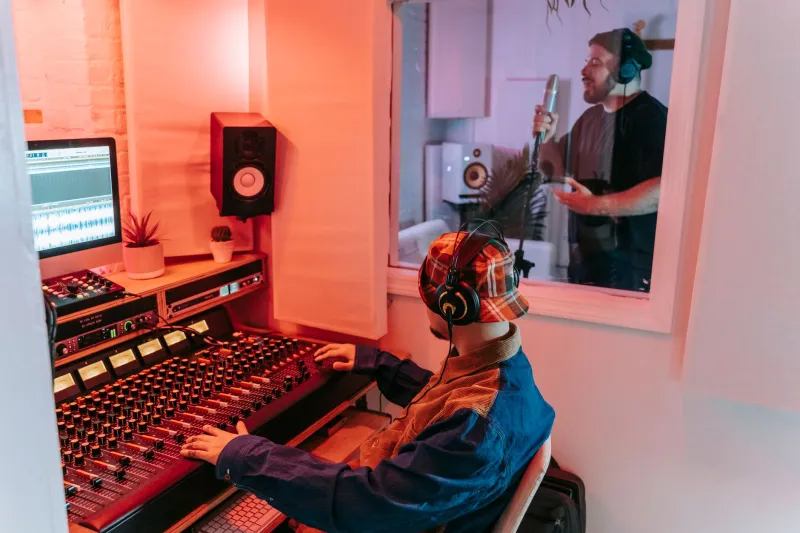
What's interesting is that this new wave of hybrid Latin music is finding its audience largely outside traditional channels. TikTok, SoundCloud, and Instagram are where these artists build their first fanbase — not Spanish-language radio, not major label playlists.
That independence is both a strength and a limitation. It means these artists aren't waiting for gatekeepers to validate them. But it also means they're operating in a cultural bubble that doesn't always reach the communities their music is actually rooted in.
Marisol admits this is something she thinks about. "My cousins in Oaxaca don't have the same algorithm I have. They're not finding me on Spotify. So there's this weird thing where I'm making music about my roots, but the people closest to those roots might never hear it."
Authenticity Is a Moving Target
The question of what counts as "authentically Latin" in 2024 is one that critics, fans, and artists are still actively arguing about — and probably will be for a while. But the artists in this space are increasingly uninterested in asking for permission.
What they're doing instead is making the argument through the music itself. Every time Dante Flores drops a corrido-sampling rap verse, every time a Texas collective layers norteño accordion over a four-on-the-floor kick drum, they're expanding the definition by doing — not by debating.
And slowly, something is shifting. Marisol's mom? She asked her daughter to play one of her tracks at a family party last summer. She didn't say she loved it. But she danced.
Maybe that's the whole argument right there.