Beyond the Dancefloor: Latin American Classical Composers Are Claiming Their Rightful Spot on US Concert Stages
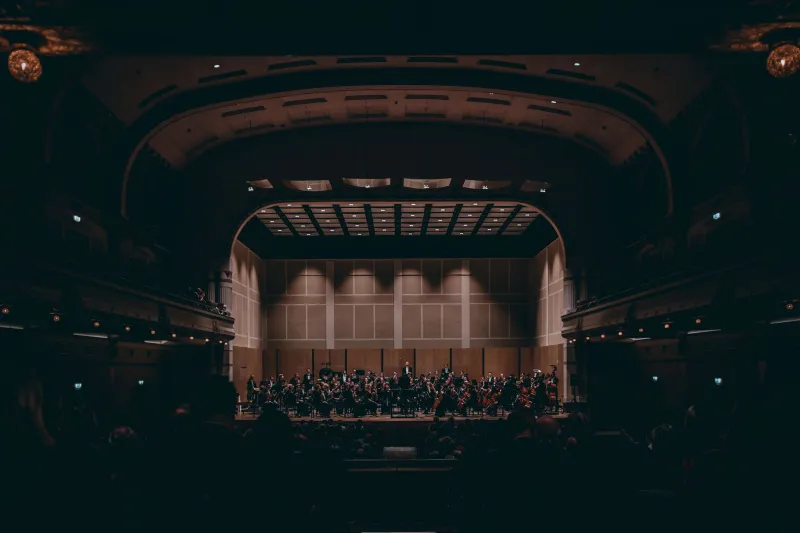
Ask most Americans to name a Latin American composer and you might get a blank stare — or maybe a tentative mention of Piazzolla if you're lucky. But walk into certain concert halls across New York, Los Angeles, Chicago, or Houston right now, and you'll find something quietly revolutionary happening: orchestras are programming works by composers from Mexico City, Buenos Aires, Bogotá, and São Paulo with the same seriousness and intention they once reserved exclusively for Beethoven and Brahms.
This shift has been a long time coming. And for those of us at Grupo Logosula who live and breathe Latin American artistic culture in all its forms — from the heat of a salsa night to the quiet power of a string quartet — it feels like watching a door finally swing open that should have been unlocked decades ago.
A Repertoire That Was Always There, Waiting
Let's be clear about something: this is not a new music movement. Latin American classical composition has a rich, layered history stretching back centuries. What's new is the attention.
Astor Piazzolla, the Argentine tango master who fused classical structure with the raw emotion of Buenos Aires street music, has been celebrated in Europe for generations. Yet it took US orchestras considerably longer to embrace his work as concert-worthy rather than merely atmospheric background music. Today, his compositions appear on programs from the Los Angeles Philharmonic to the Boston Symphony Orchestra — and audiences are showing up.
Then there's Silvestre Revueltas, the Mexican modernist whose jagged, electric scores practically vibrate with the chaos and beauty of early 20th-century Mexico. Or Heitor Villa-Lobos, the Brazilian giant whose Bachianas Brasileiras series is one of the most inventive fusions of European classical tradition and indigenous South American sound ever conceived. These are not niche figures. They are world-class composers who simply weren't given world-class platforms — at least not in the US.
The New Champions: Orchestras Leading the Charge
Something has clearly shifted in programming philosophy across American orchestras in recent years. The Los Angeles Philharmonic, under the leadership of Gustavo Dudamel — himself a Venezuelan conductor who carries the cultural weight of Latin America with every performance — has been one of the most vocal champions of this repertoire. Dudamel hasn't just slipped a Piazzolla piece into a program as a novelty; he's built entire concert evenings around Latin American voices, treating them with the curatorial seriousness they deserve.
The New York Philharmonic has also stepped up, particularly through its programming of living composers like Gabriela Ortiz, a Mexican composer whose work blends indigenous rhythmic traditions with contemporary orchestral language in ways that feel genuinely original. Hearing her music performed in Geffen Hall is a reminder that Latin American composition isn't just historical — it's alive, evolving, and urgent.
Festivals have played a huge role too. Events like the Ojai Music Festival in California and the Cabrillo Festival of Contemporary Music in Santa Cruz have long been more adventurous than major symphony orchestras, and both have featured Latin American contemporary composers prominently. These smaller, risk-tolerant platforms often serve as proving grounds before works make it onto bigger stages.
What Conservatories Are Finally Teaching
The classroom matters just as much as the concert hall. For a long time, US conservatories and university music programs treated Latin American composition as supplementary material — interesting, maybe, but not core curriculum. That is beginning to change.
Young conductors and performers are now graduating from programs where they've actually studied Revueltas alongside Stravinsky, or analyzed Villa-Lobos with the same rigor applied to Debussy. This generational shift in musical education is crucial, because the musicians who fill tomorrow's orchestras will bring this repertoire with them — not as a novelty, but as a natural part of their vocabulary.
Cultural advocates have been pushing hard for this change. Organizations like the League of American Orchestras have published research showing that diverse programming doesn't just serve representation goals — it also brings new audiences through the doors. That's a practical argument that resonates with orchestra boards who are constantly wrestling with questions of relevance and sustainability.
Why American Audiences Are Ready Right Now
There's a cultural readiness happening in the US that feels different from previous moments. Latin culture is not on the margins of American life — it is central to it. Latin music dominates streaming charts. Latin dance styles have become mainstream fitness and social activities. Latino communities represent one of the fastest-growing demographics in the country, and with that growth comes both cultural pride and a hunger for representation in spaces that have historically felt exclusionary.
But this isn't just about Latino audiences finally seeing themselves reflected on stage, as important as that is. Non-Latino Americans are also more curious and open than ever. Years of cross-cultural exchange — through music, food, travel, and yes, dance — have created a broader appetite for artistic experiences that don't fit neatly into the Western European classical canon.
When a first-time symphony-goer hears Piazzolla's Four Seasons of Buenos Aires performed live, there's often a visible moment of surprise — this is classical music? This alive, this rhythmically daring, this emotionally direct? That surprise is exactly the opening that orchestras and cultural advocates need to walk through.
The Work Still Ahead
None of this means the job is done. Latin American composers still make up a small fraction of total programming across US orchestras. Living composers from the region often struggle to get commissions compared to their European or North American counterparts. And when Latin American works are programmed, they're sometimes still treated as seasonal or thematic inclusions — a Cinco de Mayo concert here, a Hispanic Heritage Month program there — rather than as year-round staples.
Real inclusion means programming Gabriela Ortiz in January, not just October. It means commissioning new works from composers in Guadalajara and Medellín and Santiago the same way orchestras commission composers from Berlin and London. It means building relationships with Latin American music schools and sending young US musicians there to study, the same way they travel to Vienna or Paris.
The momentum is real. The appetite is real. And for anyone who's ever felt the full-body experience of Latin American rhythm — whether on a dancefloor or in a concert seat — the idea that this musical tradition deserves the grandest stages available isn't a radical proposition. It's just common sense.
At Grupo Logosula, we've always believed that the rhythm of Latin America doesn't belong in a box. It belongs everywhere. And right now, it's finding its way into symphony halls across America — one extraordinary note at a time.