Baby's First Cumbia: How Spanish-Language Kids' Music Is Winning Over American Families
Baby's First Cumbia: How Spanish-Language Kids' Music Is Winning Over American Families
Somewhere between a toddler's first steps and a parent's third cup of coffee, something pretty remarkable is happening in American living rooms. Kids are bouncing to marimba rhythms. Babies are drifting off to sleep under the gentle sway of a Spanish-language lullaby. And parents — both Latino and not — are actively seeking out music that sounds nothing like the sanitized, synth-heavy stuff that's dominated children's entertainment for decades.
Welcome to the Latin children's music boom. It's real, it's growing fast, and it's reshaping what family entertainment looks and sounds like across the US.
The Numbers Don't Lie
Spanish is the second most spoken language in the United States, and the Latino population is one of the youngest and fastest-growing demographics in the country. Those two facts alone make a pretty compelling business case for anyone thinking about where children's entertainment is headed.
YouTube channels dedicated to Spanish-language kids' content have exploded over the past five years. Channels like Cleo & Cuquin (a Spanish animated series with a massive musical component) and El Mundo de Peppa en Español have each pulled in hundreds of millions of views on the platform. Meanwhile, Spotify has quietly built out dedicated playlists for Latin children's music — "Música Para Niños" and "Canciones Infantiles" among them — that collectively draw tens of millions of streams monthly.
For independent artists, the opportunity is just as real. Bilingual singer-songwriter Mister G (Ben Gundersheimer) has been making waves with albums that blend English and Spanish across genres like cumbia, son jarocho, and Andean folk. His work has earned multiple Grammy nominations in the Latin Children's category, and his fan base spans from first-generation immigrant families in Texas to progressive, music-curious households in Portland and Brooklyn.
"Parents are hungry for something that feels alive," Mister G has said in interviews. "Latin music has this inherent warmth and rhythmic energy that kids respond to immediately. You don't need to explain it. They just move."
The Bicultural Family Factor
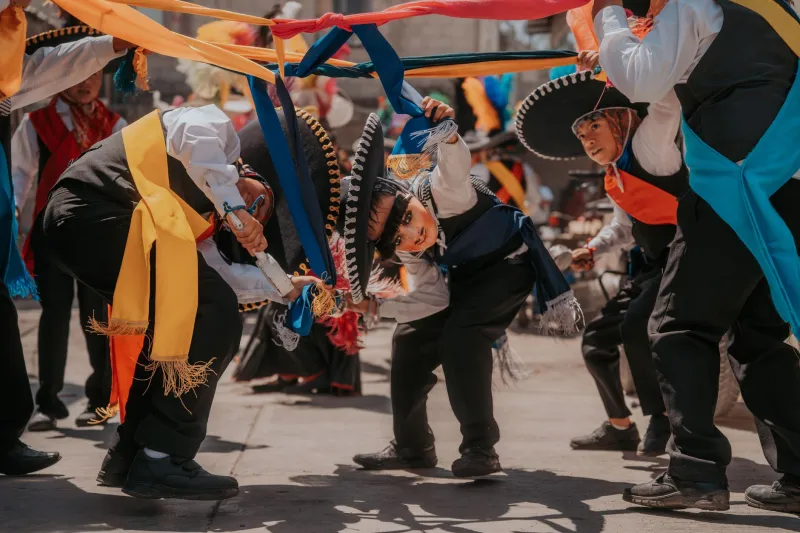
At the heart of this movement is something deeply personal: the desire to pass culture down. For millions of Latino families in the US, music has always been one of the most direct lines to heritage. A grandmother's canción de cuna, a cousin's quinceañera playlist, the cumbia that gets everyone on the dance floor at every family party — these aren't just songs. They're identity.
But for bicultural kids growing up between two languages and two worlds, that connection can feel fragile. Parents who may not speak fluent Spanish themselves are turning to music as a low-pressure, joyful entry point into the culture they want their children to carry forward.
Teachers and early childhood educators are picking up on this too. Dual-language programs across states like California, Texas, Florida, and New York have increasingly incorporated Latin folk songs into their curricula — not just as language tools, but as cultural bridges. Songs like "De Colores," "La Bamba," and "El Patio de Mi Casa" are showing up in classrooms where half the kids have never set foot in Latin America but are learning to feel at home in its musical landscape.
Beyond the Latino Household
Here's where the story gets even more interesting: it's not just Latino families driving this trend.
Non-Latino parents — particularly those in urban areas who place a premium on multicultural education — are actively choosing Spanish-language music for their kids. The reasoning varies. Some want to give their children a head start on language acquisition. Others are simply drawn to the genre's texture: the warmth of acoustic guitar, the playfulness of percussion, the storytelling tradition baked into every melody.
Artists like Lucky Diaz and the Family Jam Band (based in Los Angeles) have built a devoted following that cuts across ethnic lines. Their music blends indie pop sensibilities with Latin folk influences, making it accessible enough for any household while staying rooted in something genuine. They've performed at major children's festivals across the country and have become a go-to recommendation among parenting bloggers and early childhood specialists alike.
The crossover appeal is no accident. The best Latin children's music isn't trying to be a cultural lesson. It's just trying to be great music for kids — and great music has a way of traveling.
The Entrepreneurs Stepping In
Where there's audience, there's business opportunity. A new wave of entrepreneurs is building the infrastructure around this growing market.
Independent labels focused specifically on bilingual and Latin children's content are starting to emerge. Platforms like Risas y Sonrisas have built subscription-based models around Spanish-language educational content, with music playing a central role. Podcast producers are experimenting with audio storytelling formats that weave traditional folk songs into narrative adventures for kids.
Merchandise, live events, and school licensing deals are all part of the conversation now. Artists who once played intimate community festivals are fielding inquiries from school districts, children's museums, and national touring networks.
And streaming platforms are paying attention. Spotify's editorial team has invested more heavily in Latin children's playlists over the past two years, while Apple Music has expanded its kids' section to include more Spanish-language content. The algorithm is slowly learning that "música infantil" deserves its own prime real estate.
What This Sounds Like Right Now
If you haven't explored this corner of the music world yet, here's a quick starter map:
- Mister G — Grammy-nominated bilingual folk. Start with his album Un Mundo de Amor.
- Lucky Diaz and the Family Jam Band — Indie-Latin pop for the whole family. Their energy is contagious.
- Suni Paz — A veteran of the genre with decades of recordings rooted in traditional Latin American folk music.
- Cri-Cri (Francisco Gabilondo Soler) — The Mexican legend whose songs have been passed down for generations. If your abuela knows any children's songs, there's a good chance Cri-Cri wrote them.
- De Agua y Fuego — A newer act blending Afro-Latin rhythms with children's storytelling themes.
YouTube rabbit holes are very much encouraged.
Why This Matters Beyond the Market
It would be easy to frame this whole thing as a business story — and it is one, a pretty exciting one. But underneath the streaming numbers and the licensing deals, there's something more meaningful happening.
Music is how cultures survive. It's one of the first ways a child learns who they are and where they come from. When a kid in Chicago or Miami or Phoenix grows up humming a melody that their great-grandmother once sang in Oaxaca or Bogotá or San Juan, that's not just entertainment. That's continuity.
The Latin children's music boom isn't just good for the industry. It's good for the culture. And honestly? It's pretty good for the ears, too.
So go ahead — let the baby discover cumbia. You might find yourself dancing along.