Crate Digging Con Corazón: How Latin Vinyl Is Becoming America's Most Passionate Collecting Obsession
Crate Digging Con Corazón: How Latin Vinyl Is Becoming America's Most Passionate Collecting Obsession
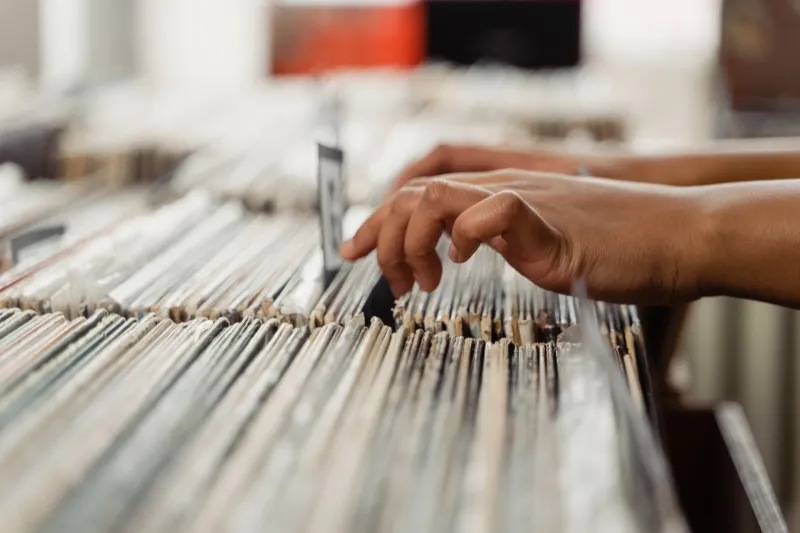
There's a particular kind of silence that falls over a record collector when they flip to the right sleeve. Fingers freeze. Eyes widen. And then — if it's the one they've been hunting — a slow, involuntary smile. Ask anyone who's been doing this long enough and they'll tell you: that feeling never gets old. Now multiply it by the weight of a grandmother's memory, a father's Saturday morning ritual, or a neighborhood that no longer exists the way it used to. That's what's happening across the United States as a new generation of Latin vinyl hunters rewrites the rules of the crate-digging game.
The market for classic Latin American records — cumbia, salsa, bolero, mambo, tropical — has been quietly exploding for the better part of a decade. But lately, it's gotten loud.
The Hunt Starts at the Flea Market
Miami's swap meets and weekend markets have always been fertile ground for Latin vinyl, but collectors say the energy has shifted dramatically in recent years. What was once a patient, almost secretive hobby has turned into something closer to competitive sport. On any given Sunday at spots like the Opa-locka Hialeah Flea Market, you'll find seasoned diggers arriving before sunrise, flashlights in hand, flipping through crates of Colombian pressings, Puerto Rican salsa labels, and Mexican bolero 45s with the same intensity you'd expect at a high-end auction house.
"People used to look at me like I was weird for paying thirty bucks for an old cumbia record," laughs Marleny Orozco, a 34-year-old Miami-based collector originally from a Colombian family in Medellín. "Now those same people are asking me where I find them."
Marleny started collecting about six years ago after inheriting a small stack of her late uncle's records — a mix of Discos Fuentes pressings and a few worn but playable Sonora Dinamita albums. What began as sentimental preservation quickly turned into obsession. Today she has over 400 records, a dedicated listening corner in her apartment, and a private Instagram account where she documents rare finds to a following of nearly 2,000 fellow enthusiasts.
Chicago and LA: The Crate-Digging Capitals of Latin Vinyl
While Miami may have the tropical atmosphere that feels made for this kind of collecting, cities like Chicago and Los Angeles have developed some of the most dedicated Latin vinyl communities in the country.
In Chicago's Pilsen and Little Village neighborhoods — long the heartbeat of the city's Mexican and Central American communities — small shops and informal record fairs have become gathering points for collectors of all ages. Ricardo Salinas, who runs a small operation out of a shared retail space on 26th Street, has been buying and selling Latin records for nearly fifteen years. He says the clientele has changed dramatically.
"When I started, it was mostly older guys who actually lived through the era. They wanted their Tito Puente, their Daniel Santos. Now I'm seeing kids in their twenties who grew up on reggaeton coming in looking for the same stuff. They want to understand where it all came from."
That generational shift is significant. In Los Angeles, where the Latin music scene has always been massive and multifaceted, record shops like those tucked into East LA's Roosevelt Avenue corridor and the broader Boyle Heights area have seen a surge in younger buyers. Some are DJs hunting for samples. Others are simply curious descendants of immigrants who grew up hearing these sounds drift from the kitchen or the backyard. For many, buying the record is the closest they can get to a lived experience that wasn't quite theirs.
Why Vinyl, and Why Now?
It's worth asking why physical records — fragile, bulky, and not exactly convenient — have become the medium of choice for this particular cultural reconnection. Streaming, after all, has made it easier than ever to access classic Latin recordings. You can find Celia Cruz on every major platform. So what's the vinyl doing that a playlist can't?
Collectors are pretty consistent in their answer: it's about the object itself.
"When I hold a pressing from 1968 that was actually manufactured in Bogotá or in San Juan, that's a physical artifact," explains Tomás Guerrero, a Los Angeles-based graphic designer and dedicated salsa collector. "The label design, the liner notes in Spanish, the weight of it — it's proof that this music existed in a real place and time. It's not just audio. It's evidence."
For second and third-generation Latinos born in the US, that sense of tangible cultural evidence carries enormous emotional weight. Many grew up in households where the connection to Latin American roots was expressed through food, language, and music — but often informally, without documentation or ceremony. A vinyl record, especially one that might have belonged to a grandparent or been imported from a home country, becomes a kind of heirloom. Something you can hold.
Small Shops, Big Missions
Driving much of this movement are a handful of small, independent Latin record shops and dealers who operate with something closer to cultural mission than pure commerce. These aren't corporate outfits. They're often run out of storefronts, garage sales, or online operations managed by one or two passionate people who happen to know their Fania from their Sonolux.
In New York, dealers specializing in salsa and Caribbean tropical music have cultivated loyal followings through social media, offering carefully graded pressings with detailed histories. In Houston, where the Tejano and norteño traditions run deep, collectors have started informal swap networks — trading records at backyard gatherings the way some people trade baseball cards.
These micro-economies of culture are doing something that algorithms genuinely can't: they're creating context. When you buy a record from someone who can tell you about the session musicians, the label's history, or the regional significance of a particular pressing, you're not just buying music. You're buying a story.
The Rarest Finds and What They're Worth
As with any collecting scene, rarity drives desire. Among Latin vinyl enthusiasts, certain pressings have achieved near-mythical status. Original Colombian cumbia records on the Discos Fuentes or Codiscos labels from the 1960s and early 70s are among the most sought-after. Early Fania Records salsa pressings — especially promotional copies or regional variants — can fetch serious money. Bolero collectors hunt for specific Mexican and Cuban pressings that were never widely distributed outside their countries of origin.
Prices have climbed noticeably. Records that might have sold for a few dollars a decade ago now regularly go for $40, $80, or even well over $100 in excellent condition. Some truly rare finds — a pristine original pressing of a limited Afro-Colombian album, for instance — have sold among collectors for several hundred dollars.
But most people in this scene will tell you the money is secondary. The thrill is in the search, and the meaning is in what you find.
A Living Archive
What's perhaps most beautiful about the Latin vinyl revival happening across the US is that it's simultaneously backward-looking and alive. These collectors aren't building museums. They're building listening rooms. They play the records. They share them. They argue passionately about pressings and sound quality and which version of a classic cumbia hits harder.
In doing so, they're keeping something vital in motion — a rhythm that crossed oceans and borders and generations, pressed into grooves of black wax, now spinning again in apartments and backyards from Miami to Chicago to East LA. El ritmo de América Latina, alive and crackling through a needle, for anyone willing to dig deep enough to find it.