Built in the Basement: First-Gen Latin Americans Are Cooking Up Sounds Nobody Has a Name For Yet
The music starts with a sample of something their mom used to play on Saturday mornings. A vallenato record, maybe, or a cassette of rancheras that survived three moves and a cross-country drive. Then comes a drum machine, a laptop, a borrowed bass guitar. And somewhere between the memory of home and the reality of growing up in Houston or Chicago or Fresno, something new gets made.
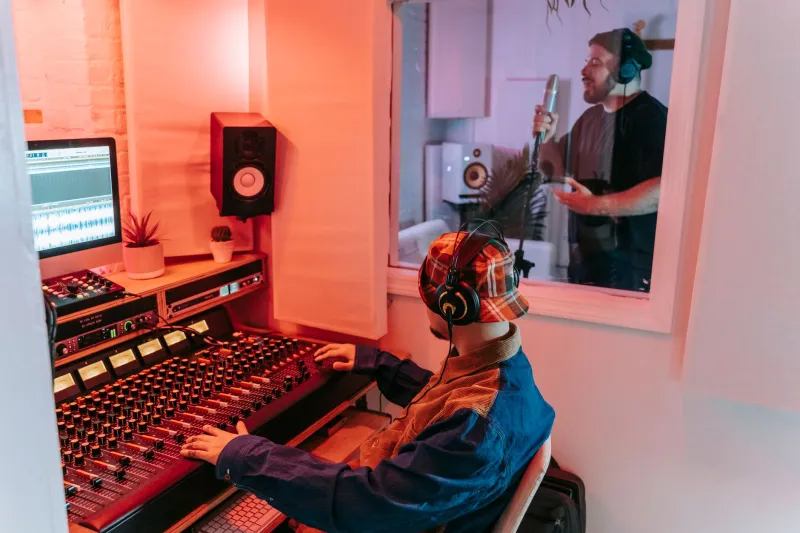
This is where the next chapter of Latin music in America is being written — not in studios with label money, not on reality TV, but in the spare bedrooms and basement setups of first-generation kids who grew up between two worlds and decided to stop choosing between them.
The In-Between Space as Creative Engine
Being first-generation means living in a permanent state of translation. You translate language, obviously, but also values, expectations, social codes, and yes — music. You grow up hearing your parents' records and your friends' playlists, and at some point those two things stop feeling like opposites and start feeling like ingredients.
For a growing number of young artists across the US, that in-between space isn't an identity crisis. It's a studio.
"I never felt like I fully belonged to American music culture or to Colombian music culture," says Bogotá-born, Atlanta-raised producer Camilo Herrera, who records under the name Polvo Digital. "And then I realized — that's actually the most interesting place to make music from. That gap is where I live, so that's where my sound lives."
Herrera's productions blend the rhythmic structure of cumbia with Atlanta trap hi-hats and ambient synth pads influenced by artists like James Blake. The result is something that sounds familiar and alien at the same time — which is, he argues, exactly how growing up first-gen feels.
Case Study: Garage Bands That Don't Have a Genre Slot
In East Los Angeles, a four-piece called Tierra Rota has been playing shows for two years without ever successfully answering the question "so what kind of music do you play?" Their set moves from mariachi-adjacent guitar lines into post-punk aggression, occasionally landing somewhere that sounds like Café Tacvba doing a session with Interpol.
"We've been called Latin rock, alternative, indie, experimental," says vocalist and guitarist Daniela Pérez, whose parents immigrated from Michoacán. "None of those really fit. We're just playing what we feel, and what we feel is complicated."
That complication is the whole appeal. Tierra Rota's shows in Lincoln Heights and Boyle Heights pull in crowds that are equally split between longtime neighborhood residents who grew up on regional Mexican music and younger indie fans who found the band through Spotify's algorithmic playlists. The fact that both groups show up to the same show and leave satisfied is, in its own way, a genre-defying achievement.
Electronic Music as the New Common Language
If there's one thread connecting a lot of the new fusion sounds emerging from first-gen communities, it's electronic production. Bedroom software like Ableton and FL Studio has become the great democratizer — it doesn't care whether you're drawing from merengue or Memphis rap. It just asks what you want to make.
In Miami, producer and DJ Valentina Cruz (who goes by Valkiria Beats) has spent the last three years building a catalog that fuses Haitian-Dominican influences — she's the daughter of a Dominican father and a Haitian-American mother — with house music structures and reggaeton percussion. The result is something that Miami's Latin club scene has embraced enthusiastically, even if nobody can agree on what to call it.
"Labels are for people who need to market things," Valkiria says, not unkindly. "I make music for people who want to dance and feel something. That's enough of a category for me."
Her SoundCloud releases regularly crack tens of thousands of plays, and she's begun getting bookings outside Florida — a sign that the appetite for what she's making extends beyond the specific cultural context that created it.
The Rejection of Traditional Latin Music Categories
There's something almost political about the way many of these artists talk about genre labels — specifically, traditional Latin music categories. "Latin" as a marketing term has always been a blunt instrument, collapsing enormous regional diversity into something palatable for mainstream American consumption. For first-gen artists who grew up watching that happen to their parents' music, there's a real desire to sidestep the whole machine.
"When a label says 'Latin music,' they usually mean whatever's charting in Puerto Rico or Colombia that month," says Chicago-based producer Marco Villanueva, whose family is from Veracruz. He makes music that incorporates son jarocho rhythms alongside Chicago footwork and ambient drone. "My dad's music isn't in that conversation. My neighborhood's music isn't in that conversation. So why would I let that category define me?"
Villanueva's approach is increasingly common among first-gen artists who feel that the existing Latin music industry — even its more progressive corners — wasn't built with them in mind. Building outside of it feels less like rebellion and more like common sense.
Where This All Goes Next
The sounds coming out of these basements and bedrooms aren't staying underground forever. Some of them are already finding their way onto editorial playlists, into independent film soundtracks, and onto the bills of festivals that specialize in genre-defiant music. The pipeline from DIY bedroom project to genuine cultural moment has never been shorter.
What's exciting — and what Grupo Logosula has been tracking closely — is that these artists aren't trying to make Latin music more accessible to American audiences. They're not softening anything or smoothing out the edges. They're making music that reflects their actual lives, which happen to be both deeply Latin and deeply American. The fusion isn't a strategy. It's just the truth of who they are.
And if you need a genre name for that, maybe that's the one to use: the truth.