The Parking Lot Is the Stage: How Lowrider Clubs Keep Chicano Soul in Rotation
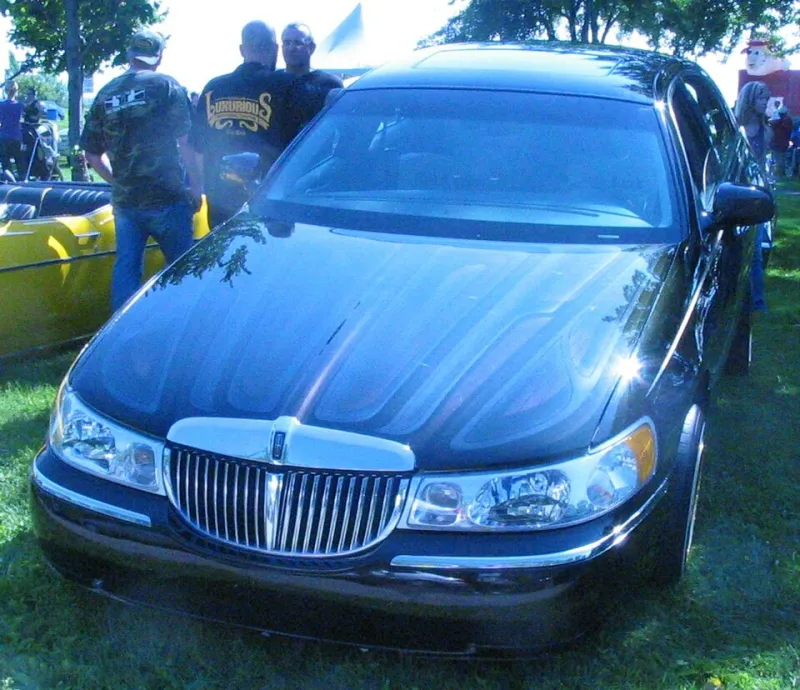
Photo: Bull-Doser, Public domain, via Wikimedia Commons
It starts as a rumble you feel in your chest before you see a single chrome bumper. On a Saturday night in 2026, in a strip-mall parking lot outside Los Angeles, a row of lowriders sits with their trunks open and their sound systems warm. A DJ is set up between a 1964 Impala and a folding table of vinyl. The first record drops—a doo-wop slow jam with a Spanish-language B-side—and the pavement turns into a living room.
This is not a car show. It is a listening session with horsepower. Across the US, lowrider clubs in cities like San Antonio, Albuquerque, Phoenix, and Chicago still build their weekends around cruise nights, park-ups, and oldies. The cars get the attention. The sound is the point.
A Sound System With a Family Tree
Lowrider sound systems have never been casual. A trunk full of subs and amps is a point of pride, but the music that comes out of it is curated. Club elders bring out the same Chicano soul, doo-wop, and Latin rock records they played in the 1970s and 1980s. Younger members learn the track list the way they learn to wire a battery: by watching, asking, and getting it wrong once.
The result is a peculiar kind of oral history. A song like Thee Midniters' Whittier Blvd or a Rosie and the Originals ballad is not just background music. It is a marker of taste, a family memory, and a claim on a neighborhood's cultural identity. When a club DJ mixes a sweet soul cut into a lowrider oldie, the crowd responds because the sequence is familiar. It has been passed down.
Doo-Wop on Four Wheels
The link between lowriders and oldies is not accidental. In the decades after World War II, Mexican American car culture and the radio sounds of East LA grew up together. Doo-wop harmonies, Chicano soul, and garage rock became the soundtrack to cruising, courting, and cruising again. The lowrider was a canvas; the record player was the narrator.
In 2026, that history is still audible. Collectors haul crates of 45s to park-ups. DJs alternate between vinyl and digital files, but the vinyl is not nostalgia for its own sake. It is a way to keep the sequence honest. A record has a beginning, a middle, and an end. You cannot skip the slow part. You have to let the song breathe.
The Younger Generation Gets the Keys
The most interesting shift is who is doing the curating. Lowrider clubs are not only older men in matching jackets. They include daughters, nieces, and younger cousins who grew up in the back seat and now run the aux cord. Some are DJs. Some are photographers. Some are the ones who set up the sound system while the older members argue about the mix.
That handoff matters. A parking lot is not a museum with velvet ropes. It is a place where a teenager can hear a song from 1968 and decide it belongs in a 2026 playlist. The archive stays alive because it is played, not because it is preserved behind glass.
Why a Parking Lot Works
A club meeting or a cruise night has no ticket booth, no dress code, and no opening act. That low barrier is the whole point. Families bring folding chairs. Someone sells tacos from a cooler. A car club president gives a short speech about an upcoming charity run. Then the music takes over.
The parking lot also has a social function that streaming cannot replicate. You hear a song, you ask who it is, and someone hands you a record sleeve. You learn that the B-side is better. You learn that the bass line was played by a session musician nobody credits. You learn that the song was recorded three blocks from where you are standing.
That is why the parking lot feels like a living archive. It is not just a place to show cars. It is a place to show what you know, and to let someone else learn it. In 2026, with so much music compressed into algorithms and 15-second clips, there is something stubbornly human about a slow jam echoing off an asphalt lot while a lowrider idles in the dark.