Blood, Beats, and Belonging: How US Latinos Are Using Genealogy to Dig Up Their Musical Roots
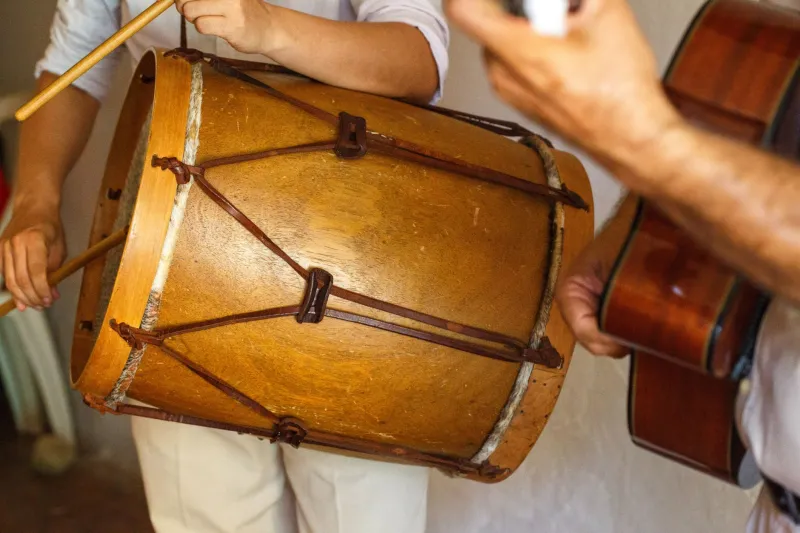
Somewhere in a storage unit in Albuquerque, New Mexico, there's a cardboard box that changed Marisol Reyes's entire relationship with music. Inside: a cracked wooden instrument that nobody in her immediate family could name. Her grandmother had carried it from Oaxaca decades ago, wrapped in a dish towel, and never really talked about it. It sat in that box for thirty years.
Then Marisol got her DNA results back.
"The test pointed me toward a very specific indigenous Mixtec lineage," she says. "And when I started researching that, I found photos of the exact same instrument — a small regional variant of the huehuetl drum. My grandmother hadn't been hiding it. She just didn't have the language to explain what it meant."
Marisol is one of a quietly growing number of US-based Latinos who are using genealogical tools — everything from commercial DNA kits to archival church records and regional ethnomusicology databases — to trace their musical heritage back to specific corners of Latin America. What they're discovering isn't just history. It's a living, breathing reconnection to sounds that globalization, migration, and decades of cultural blending nearly erased.
The Ancestry Boom Meets the Music Question
The genealogy industry exploded in the US over the past decade, and Latino communities have been part of that wave in a big way. Services like AncestryDNA, 23andMe, and MyHeritage have made it easier than ever to map ethnic and regional origins. But for many Latinos, the results opened up questions that went well beyond family trees.
Music, it turns out, is one of the most powerful entry points into that conversation.
"When people find out they have roots in, say, the Afro-Colombian Pacific coast, or the Andean highlands of Peru, or the Yucatán Peninsula — the first thing a lot of them want to know is, what did the people from there sound like?" says Dr. Ignacio Varela, an ethnomusicologist at the University of Texas at Austin who has been informally advising several of these personal heritage projects. "Music is tangible. It's something you can actually do with the information."
And increasingly, people are doing exactly that.
From Data to Drumbeat
In Chicago's Pilsen neighborhood, a small collective called Raíz Sonora has been quietly hosting monthly workshops for the past two years, specifically designed for Latinos who've used ancestry research to identify a musical tradition they want to explore. The sessions bring in teaching artists, regional instrument makers, and — occasionally — elders from specific Latin American communities who can speak to the living practice of a particular style.
Organizer Tomás Guerrero, a second-generation Mexican American whose genealogy research revealed strong Huastec roots, started the group after his own personal journey led him to the huapango — a virtuosic fiddle-driven music from the Huasteca region spanning parts of Veracruz, Hidalgo, and San Luis Potosí.
"I grew up listening to norteño and banda, which I love," he says. "But when I found out where my family actually came from geographically, and then found out there was this incredible, almost acrobatic music from that region that most people outside of Mexico have never heard — I felt like someone had handed me a door I didn't know existed."
He's not alone. Raíz Sonora now has a waitlist.
The Complexity of Reconnection
It's worth saying clearly: this movement isn't without its tensions. Genealogy tools are imperfect, and DNA results can be reductive — collapsing vast, nuanced indigenous and Afro-Latin identities into tidy percentages. Cultural practices, especially indigenous ones, carry protocols around who can learn them, who can teach them, and under what circumstances.
Some community members and scholars have raised concerns about the risk of turning living traditions into personal lifestyle accessories — a kind of roots tourism that centers the diaspora experience at the expense of the communities where these practices are still actively maintained and protected.
"There's a difference between reconnecting with your heritage and extracting from someone else's culture," says Valentina Cruz, a cultural educator and Afro-Peruvian music advocate based in Los Angeles. "The genealogy piece can be a genuine starting point, but it has to come with humility, real relationships, and a willingness to follow community leadership — not just your DNA report."
Most of the individuals navigating this path seem keenly aware of that line. Many are actively building relationships with artists and cultural organizations in the countries of origin, traveling to learn in person, and contributing financially to preservation efforts.
What Gets Brought Back
The practical outcomes of this movement are genuinely remarkable. In Miami, a Cuban American family used parish records from Camagüey province to trace their lineage to a specific style of punto cubano — a sung poetry tradition with deep rural roots — and have since started performing it at local cultural events. In Los Angeles, a Guatemalan American musician discovered through archival research that his great-great-grandparents were marimba players in the Quetzaltenango region, and has now spent three years studying under a marimba master to reclaim that lineage.
In Houston, a multigenerational family project sparked by a DNA test has evolved into a full community archive: recordings, oral histories, sheet music transcriptions, and instrument diagrams, all centered on the son jarocho tradition from Veracruz.
"We're not just learning songs," says project coordinator Elena Bustamante. "We're learning what those songs meant to specific people in a specific place at a specific time. That context is everything."
The Bigger Picture
What's happening here is, at its core, a form of cultural resistance. In an era when Latin music is increasingly shaped by streaming algorithms, global pop trends, and commercial crossover pressures, these genealogy-driven projects represent something almost radical: people insisting that their musical identity goes deeper than whatever's trending.
It's also a reminder that the Latin American diaspora in the United States is not a monolith. The music of the Andes is not the music of the Caribbean coast. The son huasteco is not the cumbia. The marimba of Guatemala is not the marimba of Colombia. These distinctions matter — and the people doing this work are proving that American-born Latinos are ready, and hungry, to honor them.
Marisol Reyes, back in Albuquerque, has since connected with a Mixtec cultural organization in Oaxaca. She's learning. She's asking questions. And that cracked drum from her grandmother's box? It's been carefully restored by a traditional instrument maker.
"The first time I played it," she says, "I cried. I don't know exactly why. But I think it was because something that had been quiet for a very long time finally got to make noise again."