Fifteen Seconds of Fire: The Latina TikTokers Who Are Actually Running America's Dance Culture
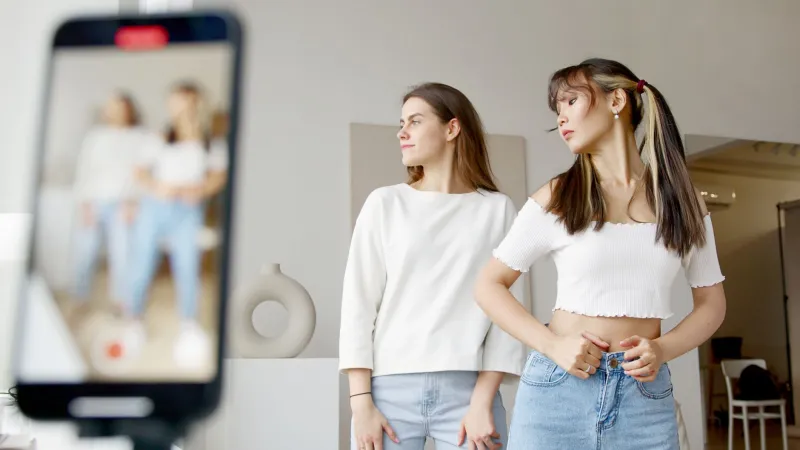
Here's a fun exercise: think about the last dance you saw everyone doing at a party, a wedding, or in a gym warm-up video. Now ask yourself — where did that move actually come from? Odds are better than you'd think that it started with a young Latina woman filming herself in her bedroom, living room, or backyard, posting it to TikTok, and watching the world copy it within 72 hours.
This is not an exaggeration. It's the new reality of how American dance culture moves — and the women driving it aren't getting nearly enough credit for what they've built.
The Algorithm Is Not the Story
Let's get one thing straight before we go any further: TikTok's algorithm is often cited as the engine behind viral dance trends, and sure, it helps content spread. But the algorithm doesn't create choreography. People do. And right now, a significant and growing portion of the choreography that's shaping American popular dance is being created by young Latin American and Latina women who bring a specific cultural fluency to their work that can't be replicated by just anyone pointing a phone at themselves.
Creators like Yeri Mua, whose transitions between cumbia footwork and contemporary street styles have racked up millions of views, or Loren Gray-adjacent creators in the Latin space who blend reggaeton body movement with hip-hop's gestural vocabulary — these aren't just "dancing for views." They're doing something genuinely creative: translating the rhythmic traditions they inherited into a visual language that a global audience can access and participate in.
The 15-second format, far from being a limitation, has forced a kind of choreographic discipline. Every movement has to land. Every transition has to be clean. There's no room for filler. That constraint has produced some remarkably tight, inventive work.
From the Living Room to the Mainstream
The pipeline from Latina TikTok creator to mainstream American dance culture is now well-established, even if it's rarely acknowledged honestly.
A creator posts a video — maybe it's a new footwork pattern she developed based on salsa timing, or a body isolation sequence rooted in Afro-Caribbean dance tradition — and within days, non-Latina influencers with larger followings are replicating the move. A week later, it shows up in a celebrity's Instagram story. A month later, it's in a music video or a commercial. By that point, the original creator is often invisible in the conversation.
This credit gap is real and it matters. But what's also real is that the creators themselves are increasingly savvy about protecting and monetizing their work. Many have moved beyond TikTok to establish choreography businesses, teach virtual classes, and negotiate brand deals that acknowledge their creative contribution explicitly.
Miranda Perez, a 22-year-old choreographer from the Bronx who built her following through cumbia-influenced TikTok content, put it plainly in a recent interview: "I'm not a content creator. I'm a choreographer who uses content to get my work seen. There's a difference and I want people to understand that."
The Cultural Translation Is the Craft
What makes Latina TikTok choreography distinct — and why it resonates so broadly — is the cultural translation happening in real time. These creators aren't simply performing Latin dances for an American audience. They're doing something more sophisticated: finding the connective tissue between Latin movement traditions and the contemporary American movement vocabulary that their audience already knows.
A creator who grew up dancing merengue at family events and also learned hip-hop choreography in school isn't just combining two things. She's synthesizing them into something new that carries the rhythmic intelligence of both traditions. When that synthesis hits right, it creates a kind of instant recognizability — the audience feels like they already know the move even though they've never seen it before.
This is actually how Latin dance has always evolved. Salsa absorbed jazz. Cumbia absorbed cumbia's own regional variations across a dozen countries. Reggaeton absorbed dancehall. The tradition of creative synthesis is baked into Latin dance culture at a fundamental level, and these TikTok creators are its current practitioners.
The Business of Going Viral
For the creators who've figured out the business side, TikTok virality has become a legitimate launchpad. Dance studios across the US — from Miami to Chicago to Los Angeles — are now booking TikTok-famous Latina choreographers for workshops and residencies. Brands from athletic wear companies to streaming platforms are reaching out for sponsored content and creative partnerships.
More interestingly, several creators have leveraged their online presence into choreography credits for actual music videos and live performance tours. The entertainment industry, which once would have required a decade of auditions and connections to access, is increasingly coming to them.
The key shift is that these women own their creative identity in a way that previous generations of Latin dance performers often didn't. When a choreographer gets hired to do a music video through a traditional industry pipeline, the credit often goes to the director or the artist. When a TikTok creator's specific move gets used in a music video because the artist literally learned it from her page, the origin is harder to erase — even if the industry tries.
What the Dance Floor Owes Them
Next time you're at a wedding and someone busts out a move that you recognize from your For You page, take a second to think about where it actually came from. Somewhere, a young Latina woman with a phone and a serious relationship with rhythm created that. She probably did it multiple times until it was right. She posted it, responded to comments, refined it, taught it, and watched it travel farther than she could have imagined.
American dance culture has always borrowed from Latin traditions — often without acknowledgment. What's different now is that the creators are visible, they have platforms, and they're not going anywhere. The living room is the new dance studio, and the women running it are setting the tempo for the whole country.