La Reina de la Sala: How Latina Mothers Have Always Been the True Curators of Family Sound

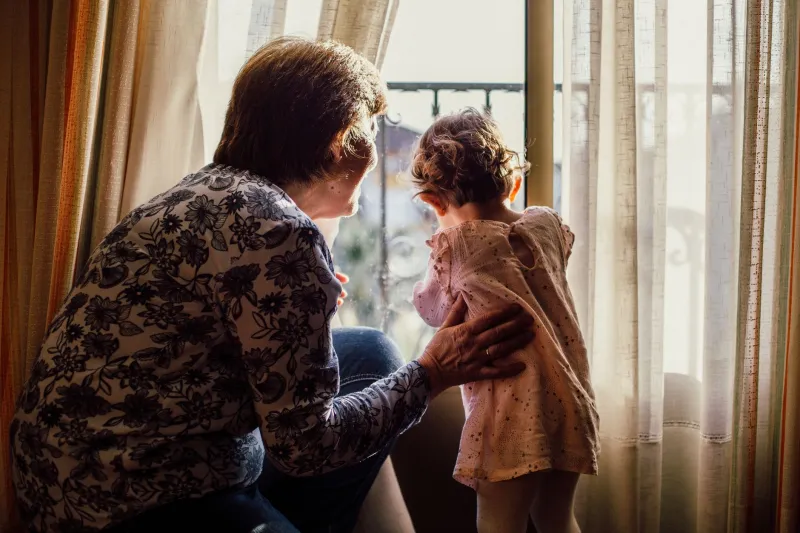
Photo: Giles Laurent, CC BY-SA 4.0, via Wikimedia Commons
Ask almost any US-raised Latino adult which song takes them straight back to childhood and watch what happens. Their eyes go somewhere else for a second. Then they smile — or tear up — and they say a name. Selena. Celia Cruz. Vicente Fernández. Marco Antonio Solís. And almost always, in the next breath, they say: that was my mom's song.
There's a reason for that. In millions of bilingual American households, the woman running the kitchen was also, without any formal title or recognition, running the family's entire relationship with music.
The Playlist Before There Were Playlists
Long before streaming services offered "family mix" features, Latina mothers were doing that work manually — and with far more intention. They chose which cassettes made the road trip. They decided which cumbia records came out at birthday parties. They hummed boleros while folding laundry and, without realizing it, embedded those melodies into their children's emotional memory like something permanent.
"My mother didn't think of herself as teaching us music," says Marisol Herrera, 38, a second-generation Mexican American woman living in Phoenix. "She was just playing what she loved. But now I realize every song she played was a lesson. About where we came from. About what love sounded like. About how to feel things in Spanish even when I was thinking in English."
This is the quiet curriculum of the Latina household — transmitted not through textbooks or formal instruction but through the specific songs a mother chose to play on a Saturday morning while the whole family was still home.
Gatekeeping With Love
The word "gatekeeper" has taken on a negative connotation in contemporary culture, but in this context it's worth reclaiming. Latina mothers and grandmothers have historically functioned as the primary gatekeepers of musical tradition in their families — deciding, consciously or not, which artists and sounds get passed to the next generation and which get left behind.
Cultural researcher and educator Dr. Luz Mendoza, who studies intergenerational music transmission in Latino families across the Southwest, has spent years documenting this phenomenon. "The mother's musical preferences don't just influence children — they often determine what those children consider 'real' Latin music for the rest of their lives," she explains. "If your mother played salsa dura, that's your baseline. If she played rancheras, that's your emotional home. The first musical map we have is almost always drawn by her."
This influence extends beyond passive listening. Many Latina mothers actively teach — pulling children onto the dance floor at family gatherings, correcting footwork, explaining the difference between a cumbia step and a merengue step with the patience of someone who has done it a thousand times. They are, in the truest sense, the first dance teachers most Latino Americans ever had.
The Bilingual Household Sound
In homes where English and Spanish coexist, music often becomes one of the most consistent markers of cultural identity. And in those spaces, mothers frequently use music as a bridge — a way of keeping children connected to a heritage that might otherwise feel abstract or distant.
"My mom would play Rocío Dúrcal when she was happy and Paquita la del Barrio when she was mad," says Roberto Castillo, 29, a Cuban American musician based in Miami who credits his mother's record collection as the foundation of his entire musical education. "I knew her moods by the music. But I also knew my culture by the music. Those two things were the same thing in our house."
For children growing up between two languages and two cultural worlds, this kind of sonic anchoring is significant. Research on cultural identity development among second-generation Latinos consistently points to family-based cultural practices — including music and dance — as critical factors in how young people relate to their heritage. And at the center of those practices, more often than not, is a mother or grandmother making deliberate choices about what gets played.
When the Kids Push Back — and What Happens Next
Of course, the story isn't always harmonious. Many US-raised Latino children went through phases of rejecting their parents' music — turning down the volume on the rancheras, rolling their eyes at the salsa at family parties, insisting on English-language pop as an assertion of American identity.
But something interesting happens later. Almost universally, the music comes back.
"I was embarrassed by my mom's music when I was thirteen," admits Vanessa Ortiz, 34, a Colombian American woman in Chicago. "Now I have a playlist called 'Mom's Kitchen' that I play every Sunday. It has everything she used to play. And I play it for my own kids."
Dr. Mendoza calls this the "return pattern" — the way Latin music absorbed in childhood tends to resurface in adulthood with heightened emotional power. "The songs the mother played become associated with safety, warmth, belonging. When life gets hard or complicated, people return to those sounds instinctively. That's not nostalgia — that's deep cultural programming."
Passing the Remote, Passing the Culture
In the streaming era, the dynamic has shifted somewhat. Teenagers now have their own accounts, their own algorithms, their own discovery systems. But the foundational layer — the songs that feel like home — still comes from somewhere older and more human.
And Latina mothers have adapted, too. Many are now active on social media, sharing videos of themselves dancing, posting throwback songs, recommending artists to their kids in family group chats. The medium has changed; the role hasn't.
At Grupo Logosula, we've always believed that Latin music's staying power in the US isn't just about great artists or smart marketing. It's about the people inside homes who decided, generation after generation, that these songs were worth keeping. Those people, more often than we acknowledge, were the women who fed us, raised us, and danced with us in the kitchen.
So the next time a Latin song hits you somewhere deep and unexpected — check yourself. There's a good chance you learned to love it before you even knew what music was. And there's a very good chance a woman in your family put it there on purpose.